Toba Lake  

Posted by Romario Mile


Toba Lake

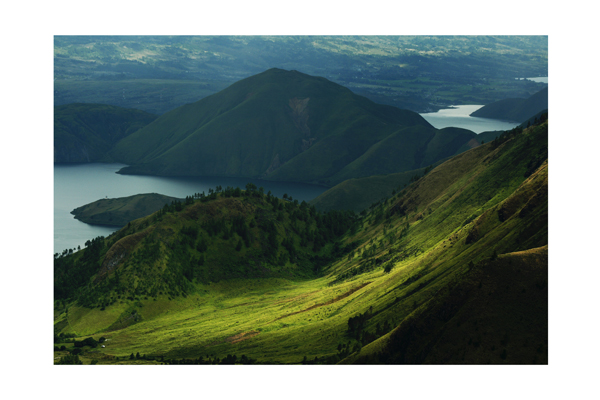
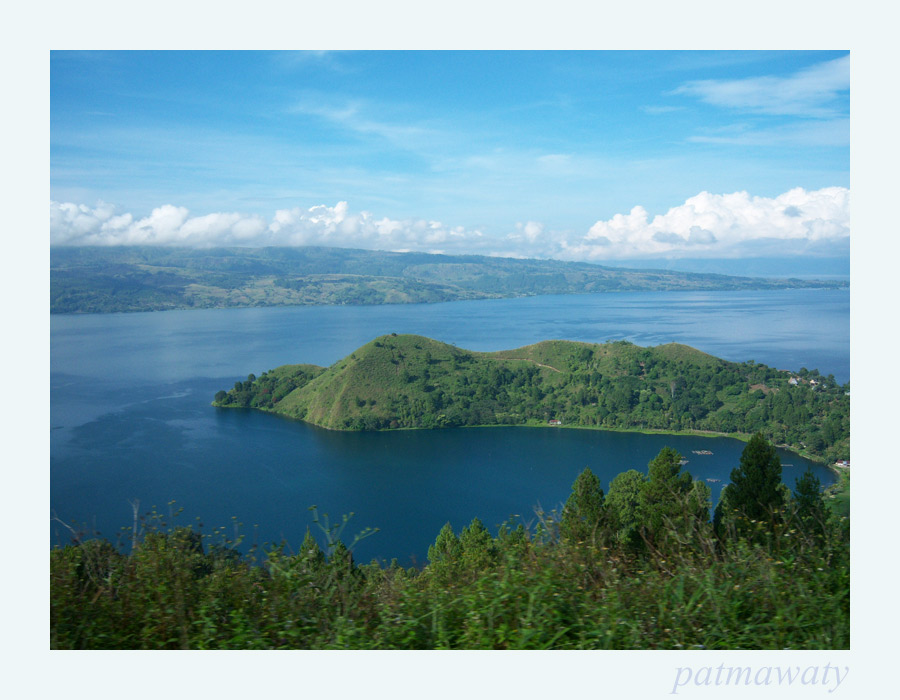
World famous is the crater Toba Lake in the Batak highlands; approximately five hours drive from Medan. Toba Lake is the largest lake in South East Asia and also one of the most spectacular, surrounded by tall mountains and with the large island of Samosir in the middle. If we descend from the mountain we see the lake glittering in all its beauty. The Dutch writer Rudy Kousbroek even called Toba Lake, 'the most beautiful place on earth'. Most visitors stay on the peninsula of Tuk Tuk on Samosir, named after the linguist Herman Neubronner van der Tuuk. In general people stay several days on Samosir to discover the island, to visit traditional Batak villages, to swim in the lake and go to the hot springs in Pangururan.

The centerpiece of North Sumatra, Lake Toba's bracing climate and magnificent panoramas clear the mind and soothe the soul. For decades a magnet from regional and foreign visitors alike, Toba has developed into a full-featured highland resort while retaining the rustic charm and relaxed ambiance that define Toba's attraction. Formed by a stupendous prehistoric volcanic explosion, the 100 km long lake is the largest in Southeast Asia and one of the deepest and the highest in the world. The drama of that cataclysmic birth persist in 500 meter cliffs dropping into the blue-green waters, surrounded by steep, pine covered sloped, the climate is fresh and pleasant, with just enough rain to support the lush vegetation.

Toba Lake is a 100kms x 30kms volcanic lake in North Sumatra, Indonesia. Toba Lake has become one of the main tourist attractions for a long time in North Sumatra apart from Bukit Lawang and Nias, visited by both domestic and foreign tourist.

Surf in Bali  

Posted by Romario Mile

Bali, Indonesia : Overview

The beautiful island of Bali has all the elements of a true exotic vacation. Not only does it have world class waves at your finger tips, it has the cultural activities and a beautiful atmosphere with great local people to make a great overall experience. Every type of traveler can have a trip of a life-time in Bali, from single travelers meeting people in the town of Kuta Beach or on the cliffs of Uluwatu in the hillside eateries, to the couples and honeymooners taking in the market places, colorful parades, relaxing on the beaches and experiencing some of the greatest sunsets in the world.


Bali can be overwhelming, even for the more experienced traveler, but with our surf guide and hotel packages, we will have someone to greet you at the airport, whisk you away to your hotel or resort without haggling with the local taxis (which can definitly give a bad taste in your mouth at the start of your trip). Once at the hotel, having a surf/tour guide at your beckon call 8 hours a day makes you feel safe on the busy roads of the city and gives you the key insight to be at the right surf break at the right time with local knowledge about the area, hazards, paddle out spots and to keep your valuables safe if you choose to have him stay next to the car.


Wavehunters Bali program is based on full packages for the traveler that wants a no-hassle dream trip with competitive prices w/ Singapore Airlines or other air carrier, hotel, private surf/tour guide and transport.

We have five hotel options in the Bali area :

Blue Point Villas, Uluwatu : 5 star
This resort option is great for couples and other travelers that want to be out of the town of Kuta in a plush resort on the cliffs of Uluwatu, just a short walk down the trail to all the premium waves of the Bukit Peninsula. You will need a driver to get you down to Kuta Beach for dinner, clubs, the maket place, etc. But if you want an accommodation away from it all, this is a great choice.

Uluwatu Resort, Uluwatu : 4 star
Another resort on the cliffs of Uluwatu at the top of the trail, only a five minute walk to the top of the point with access to the premier waves of the Bukit Peninsula. Uluwatu Resort is more of a traditional Balinese style accommodation with villas and boutique type feel.

Patra Bali, Kuta : 4 star
This resort option is a great choice for the traveler that wants to be right at the beach in Kuta, walking distance to the entire downtown scene, but still wants to be in a safe and private compound. Petra Bali is only 4 blocks away from the middle of downtown Kuta Beach, but far enough away that you don't hear the hussle and bustle of the region.

Bounty Hotel, Kuta : 3 star
This hotel option is more for the younger traveler, it is right in the heart of Kuta Beach, but still has the qualities of a solid 3 star hotel. There is a higher level of noise compared to the other resorts from the surrounding area and from the pool bar that is known for partying. There are a lot of shady hotel options that can be less expensive, but theft has been reported in the past.

Nikko Bali, Nusa Du : 4 star
The Nusa Dua side of the island has constant offshore wind in DEC-MAR. This is a great option for this time of year with 4 perfect right points in front or a short drive from the resort. The beaches on the Nusa Dua side are known for having white silky sand like no other destination on earth.

Also, close by is the island of Nusa Dua :

Lembognan Beach Villas : 5 star
A short speedboat ride from Bali is this beautiful island. During peak season, this location can have fewer crowds, eliminating the budget travelers. With the same swell window, this is a great option for less crowds and a mellow small island lifestyle.

SURFGUIDE SERVICE:
Our top notch surf/tour guides are a great way to get the most out of your visit. The personal guides are at your disposal 8 hours a day with private SUV transportation, fruit and water. They will bring you to the best breaks for your ability level, knowing where the best spot on the island is before getting to your hotel with all the local knowledge and research of the tides and swell for that day. They will bring you down to the lineup, paddle out with you to show you hazards, line up location and give you the best local insight. Once you have a place pretty much dialed, they will stay and surf with you or you can ask them to watch your stuff on the beach or in the car. Just like any place, there can be petty theft and other disruptions, so this takes that burden out of your mind so you can focus 100% on your dream trip. The guides can get rental boards and set up surf lessons with certified English speaking teachers. There are numerous surf shops with all types of rental boards, but if you ride high-performance shortboards, we always recommend bringing your own.


SURF
Bali offers over 20 top-quality breaks on the southwest and southeast coasts of the island and around the Bukit Peninsula. Some of these breaks like Padang Padang & Uluwatu are world class barreling reefbreaks. Others range from good fun like the beachbreaks around Kuta and Sanur to serious heavy sucking bowls. Our guides can take the guesswork out of where to go, they have current swell and wind details before they show up each morning at your hotel and have in-depth local knowledge to get you into waves for your ability level.

The peak surf season for Bali is April-October when solid swells come out of the roaring 40's and hit the reefs around Kuta, Uluwatu, and Nusa Dua. Bali, unlike other areas of Indonesia where it is all heavy reef breaks, Bali actually has a lot of beachbreaks to offer where one won't crack their head open and quite a few mellower spots to cater to surfers of novice to intermediate ability.

The opposite season of November-March is not as big but still offersconsistent fun surf in the 3-5 ft+ range and typically has opposite winds which are ideal for the Nusa Dua (East facing) coast which features a variety of lesser known righthand waves.

Sumatra Tiger  

Posted by Romario Mile


Berani

PHYSICAL CHARACTERISTICS:

The Sumatran tiger is the smallest of the tiger subspecies as compared to the Siberian tiger which is the largest.

Sumatran male tigers average 8 feet in length (2.4 meters) from head to tail and weigh about 265 pounds (120 kilograms). Females average 7 feet in length (2.2 meters) and weigh about 200 pounds (90 kilograms).

The smaller size of the Sumatran tiger makes it easier to move quickly through the jungle. Also, their stripes are narrower than other tiger species. The tiger's patterned coloring is an adaptation for camouflage in their natural habitat, which is often tall grass. The males, especially, have a more bearded and maned appearance — neck and cheek hair are well developed.

Webbing between their toes, when spread, enables the Sumatran tiger to be very fast swimmer. They will, if given the chance, run hoofed prey into the water who are much slower swimmers.

What do they sound like?

Chrissie

The white spots on the back of tiger's ears are called "eye spots" or "predator spots". These spots are believed to function as false eyes as well as to make it look larger to any predator approaching from behind. This is particularly helpful in keeping cubs safe.

DISTRIBUTION and HABITAT:

The Sumatran tiger is found only on the Indonesian island of Sumatra in habitat that ranges from lowland forest to sub mountain and mountain forest including some peat moss forests. According the the Tiger Information Center and the World Wildlife Fund there are no more than 500 of these tigers left in the wild with some estimates considerably lower.

Sumatra has undergone much agricultural growth and as a result, tiger habitat has become fragmented with about 400 tigers inhabiting five National Parks and two Game Reserves. The largest population of about 110 tigers lives in Gunung Leuser National Park. Another 100 live in unprotected areas that will soon be lost to agriculture. The tigers that live in unprotected areas are very vulnerable to poaching as well as the killing of problem animals that come in contact with villagers encroaching upon the animal's habitat.

The continuing loss of habitat is intensifying the crises to save this tiger.

BEHAVIOR AND DIET:

The extent of a tiger's range varies according to habitat and availability of prey. Its sight and hearing are very acute, accounting for the tiger being such an efficient predator. The tiger lives alone for the most part, and there is only occasional cooperation between different individuals. A male will not tolerate other males staying in his territory, but will permit other transient males to move through his area.

A female uses her territory only for hunting, while the territory of a single male can overlap with those held by several females. The tiger emerges to hunt at dusk, and may travel more than 20 miles in a night.

The hunting method is slow and patient, stalking through often dense cover until close enough to spring. Tigers in general tend to attack prey from the side or rear at close range and when the prey weighs more than half that of the tiger, a throat bite is used and death is caused by suffocation. They will kill whatever they can catch, including fish, crocodiles and fowl, with the most common larger prey being wild pigs and deer.

Interestingly, is has been learned that one of the main reasons orangutans spend a minimal amount of time on the ground is from fear of tiger attack.

Djelita

The tiger is one of only two cats that enjoys being in water (the other is South America's jaguar). The Sumatran tiger may often be found in a pool or stream, or standing in water to keep cool.

Male and female tigers mark their ranges by spraying scent on trees or bushes.

ZOO DIET:

In the Zoo the tigers are fed an assortment of fish, meat and poultry parts.

REPRODUCTION and GROWTH:

Tigers can breed at any time of the year, but they typically mate in winter or spring. Tigers appear to reach maturity at about 4 years of age, although earlier maturity has been recorded. Gestation is normally 103 days. The usual number of cubs is two or three, though there may be as many as six.

The cubs are blind and helpless at birth weighing about 3 pounds each. Their eyes usually open by the tenth day, although some zoo-born cubs have their eyes open as soon as they are born. During the first 8 weeks the cubs consume only their mother's milk. They are suckled for 5 or 6 months.

The cubs leave the den for the first time when they are 2 months old. They are wholly dependent until they are about 6 months old when they learn how to kill. They can hunt for themselves by the time they are about 18 months old and are fully independent at two years of age. Longevity in the wild is 15 years and 20 years in captivity.

ENDANGERED STATUS:

Sumatran tigers are critically endangered. The Indonesian Sumatran Tiger Conservation Strategy has been established by the Indonesian Ministry of Forestry and it outlines management strategies for both wild and captive tiger populations.

Even without any further losses of these magnificent animals,, the present populations are so small that they are vulnerable to severe environmental catastrophes, as well as genetic problems typical of small populations.

Click to enlarge photo.
Front foot (photo taken during surgery)

Indonesia has 65 captive Sumatran tigers living in zoos, 85 in European zoos and 20 in Australian zoos. There are 70 tigers managed by North American zoos of which the Honolulu Zoo has three. Our younger male and female pair have had cubs at another zoo and we expect them to breed again starting in 2007. The entire captive population is descended from 37 wild-caught founders. To find out more about captive management of Sumatran tigers check out this site: Tiger Global Conservation Strategy.

It is now illegal to hunt tigers, however, this has not stopped the poaching of these animals for tiger products. China, by virtue of its large population, is the largest consumer and producer of manufactured products containing tiger parts.

Outside tiger range countries, large numbers of bones ands other tiger products have been found in Taiwan and South Korea, many of which were from Indonesia. A great number of these medicinal tiger products are also consumed by Asian-Americans in North American cities, who can afford the expensive prices. The World Wildlife Fund has recently made progress working with the Schools of Chinese Medicine in North America to change attitudes toward the use tiger products.

At the turn of the century, there were probably over 100,000 tigers roaming the forests of central and southern Asia. There are now only about 6,000. Three of the eight sub-species of tiger are already extinct.

Tiger Subspecies Minimum Maximum
Bengal Tiger
Panthera tigris tigris
3159 4715
Caspian Tiger
Panthera tigris virgata
Extinct since 1970's
Siberian/Amur Tiger
Panthera tigris altaica
360 406
Javan Tiger
Panthera tigris sondaica
Extinct since 1980's
South China/Amoy Tiger
Panthera tigris amoyensis
20 30
Bali Tiger
Panthera tigris balica
Extinct since 1940's
Sumatran Tiger
Panthera tigris sumatrae
400 500
IndoChinese Tiger
Panthera tigris corbetti
1227 1785
Rounded Totals 5000 7500
Adapted from a table compiled by Peter Jackson, Chairman, Cat Specialist Group, IUCN Species Survival Commission. Most estimates are educated guesses.

ALL TIGERS NEED OUR HELP...PLEASE JOIN THE FIGHT TO SAVE THEM!

HONOLULU ZOO

Scientific Name: Felidae Panthera Tigris sumatrae

Name Pandji (Deceased) Djelita Berani Chrissie
Sex male female male female
Born 07-23-90 (died 2005)
Henry Doorly Zoo
03-26-91
San Diego Zoo
09-04-99
Phoenix Zoo
06-24-99
National Zoo
Weight 225 lbs. 220 lbs. 218 lbs. 175 lbs.
Likes Being with Djelita and soaking in his pool. Eating meat and attacking her meat cube. Eating meat, chewing on spices and meatball treats Eating meat, playing with pumpkins and pulling apart coconuts.
Fun Facts Pandji was hand raised and very friendly. His name means "guardian protector". Likes the perfume her keeper sprays in the exhibit. Her name means "beauty" in Indonesian. He likes to run around with his keepers. His name means "brave" in Indonesian. Shes a jumper and likes things she can throw around.
History Was sick for several years and benefited from extraordinary medical care.
Pandji's care
Pandji's Passing
Spayed due to a medical condition and never had cubs. A donation from the Phoenix Zoo, via the Fort Wayne Childrens Zoo in Indiana. Came from Fort Wayne Childrens Zoo in Indiana on indefinite loan.
Name Malosi Keahi Tondi
Sex male male male
Born 09-15-2008
Honolulu Zoo
09-15-2008
Honolulu Zoo
09-15-2008
Honolulu Zoo
Weight 30 lbs. 30 lbs. 30 lbs.
Fun Facts Malosi is a Samoan name meaning "strong, powerful" Keahi is a Hawaiian name meaning "fire" Tondi is an Indonesian name meaning "spiritual one"

Banggai Cardinal  

Posted by Romario Mile


The Banggai cardinalfish (Pterapogon kauderni) is a small tropical cardinalfish (family Apogonidae). This attractive fish is popular in the aquarium trade.This species is restricted to the Banggai Islands of Indonesia.This species has an extremely limited geographic range (5,500 km²) and small total population size (estimated at 2.4 million). The Banggai cardinalfish is composed of isolated populations concentrated around the shallows of 17 large and 10 small islands within the Banggai Archipelago. A small population also occurs off Central Sulawesi, within Luwuk harbor. One additional population has become established in the Lembeh Strait (North Sulawesi), 400 km north of the natural area of the species distribution, following introduction by aquarium fish traders in 2000.

The Banggai cardinalfish is a popular aquarium fish in the fishkeeping hobby.

The species is collected by local fishers and traded as an aquarium species at unusually high levels. The species first appeared in the international trade in 1995–1996. By 2001, 600,000–700,000 fish were exported annually; trade estimates for 2001–2004 are 700,000–900,000 fish/yr with collection occurring throughout the archipelago. Surveys identified significant (>90%) declines in two populations that were fished from 2001 to 2004, including extinction of a population off Limbo Island.

The species is collected by local fishers and traded as an aquarium species at unusually high levels. The species first appeared in the international trade in 1995–1996. By 2001, 600,000–700,000 fish were exported annually; trade estimates for 2001–2004 are 700,000–900,000 fish/yr with collection occurring throughout the archipelago. Surveys identified significant (>90%) declines in two populations that were fished from 2001 to 2004, including extinction of a population off Limbo Island.


These fish have been successfully bred in captivity. The male broods the eggs and later the fry in his mouth cavity. The male does not eat at this time and will hold the brood of around 25 fry for 4–5 weeks. Fry can then be raised on brine shrimp nauplii enriched with marine lipid supplements.[citation needed] Captive-breeding presents an alternative to wild caught fish. However, the relatively high cost–benefit of its production combined with the large number of less expensive wild-harvested fish has prevented expansion of aquaculture efforts. In addition, a newly emerging threat (a viral disease) has been documented in wild-harvested individuals maintained in captivity.

Collection for the aquarium trade has threatened this species with extinction. This increases the demand for captive-bred specimens. Although the proposal to protect this species under the CITES (Convention on International Trade of Endangered Species) Appendix II was initially rejected, in September 2007, the Banggai cardinalfish entered the list for the first time, assessed as Endangered under Criterion B, based on the very small area of occupancy, the severe fragmentation and the ongoing continuing decline due to exploitation for the international aquarium trade.

Indonesia Travel